
Helping
Native-Bees
in the Garden
If you’re afraid of bees, or afraid of being stung — don’t worry, bees, especially native-bees, rarely sting.
Honey-bees are not native to North America, but rather Europe; with resources already scarce, native-bees of North America are struggling to compete; help preserve our native-bees by learning how to identify and aid them.
Pop-Quiz Activity:
Before we start, how much do you already know about bees?
Question #1: What do bees search for in flowers?
A. Pollen
B. Nectar
C. All the above
Question #2: What are bees’ least favorite color?
A. Violet
B. Yellow
C. Red
Question #3: How do native-bees carry pollen?
A. Mouth
B. On Fuzzy-Hairs
C. Antennae
How’d you do? Scroll down to the bottom of the page for the answers!
Types of Native-Bees:
Most native-bees are solitary, except the bumble bee, and a few species of sweat bees. Native bees aren’t social beings like the European honey bee, they don’t cluster in hives, they don’t have a queen, or worker bees, and they don’t make honey.
Carpenter Bee:
Carpenter bees don’t sting, and nest in woods, more specifically: dead weathered trees, logs, or wooden-infrastructure such as: buildings, fences, or telephone-poles.
Appearance: Large-sized, and shiny, with a black, hairless abdomen and yellow marking on the thorax.
Mason Bee:
Mason bees use moist or dry soil to fill in gaps in nesting-cavities such as wood, or stone.
Appearance: Medium-sized, usually metallic greenish-blue, or black in color and slight hairy.
Mining Bee:
Mining bees nest by burrowing into soil, constructing their homes with mud and creating small mounds of soil. They love open patches of soil.
Appearance: Medium-sized, hairy, brown, or black in color.
Sweat Bee:
Sweat bees nest into the soil, or inside rotten-wood. While most sweat bees are solitary, some species of sweat bees are eusocial, meaning they live in a colony with certain bees performing specific duties.
Appearance: Small to medium sized, slender, non-hairy, brown, or black in color, but some are metallic green, blue, or purple.
Leafcutter Bee:
Leafcutter bees nest in the soil, or often in rotten-wood, constructing long, thin tunnels lined with circular-shaped leaf cutouts from native-plants such as: a redbud, or milkweed.
Appearance: Large-sized, hairy, with black and white stripes on their abdomen.
Bumble Bee:
Bumble bees are the most abundant species of the native bees, they nest in dry enclosed cavities, either underground (ex. rodent-holes,) on the ground (ex. thick-grass,) or aboveground (ex. tree-holes).
Appearance: Large-sized, hairy, mostly black and yellow with occasional white or orange coloration.

Sweat Bee
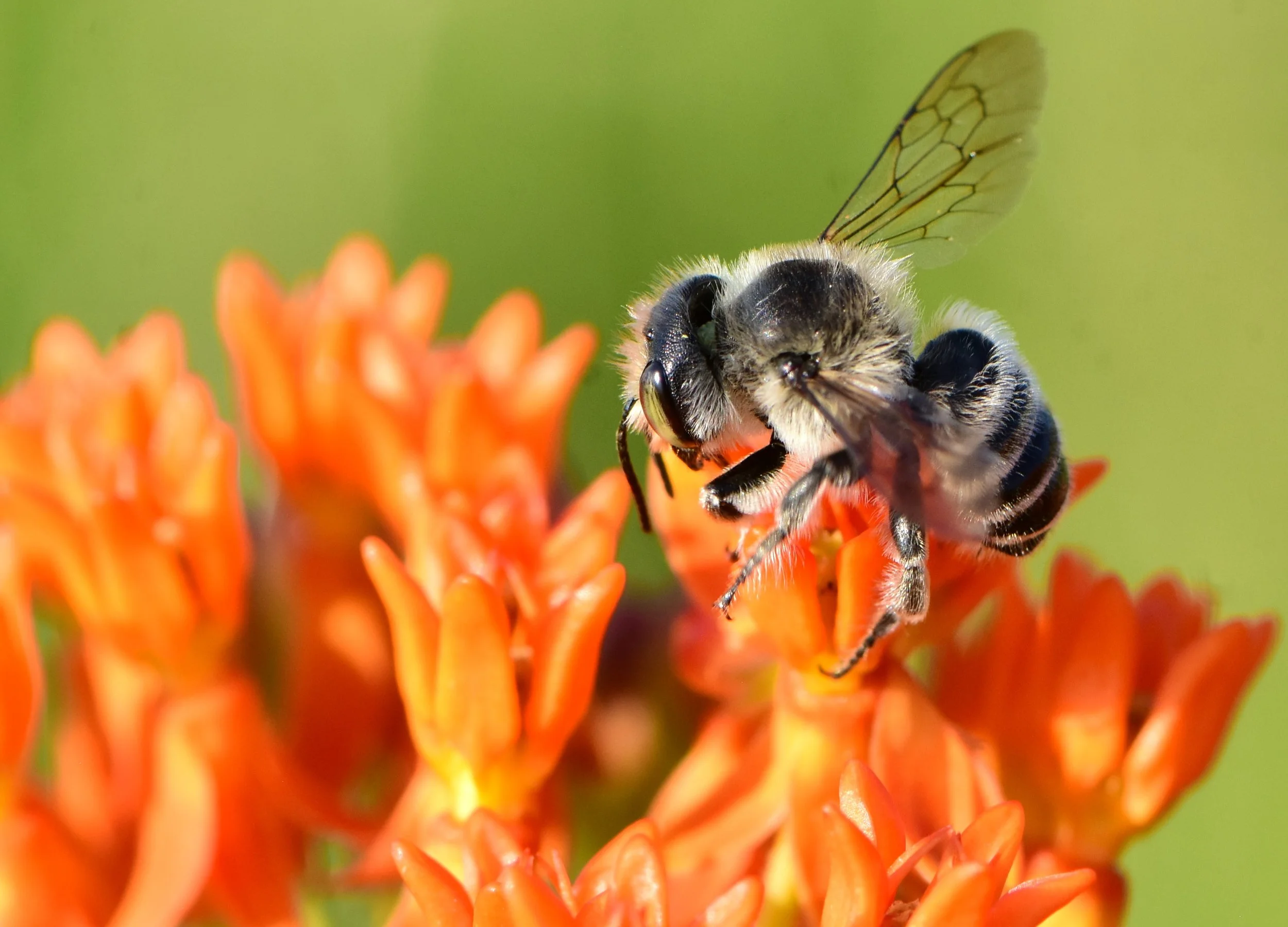
Leafcutter Bee
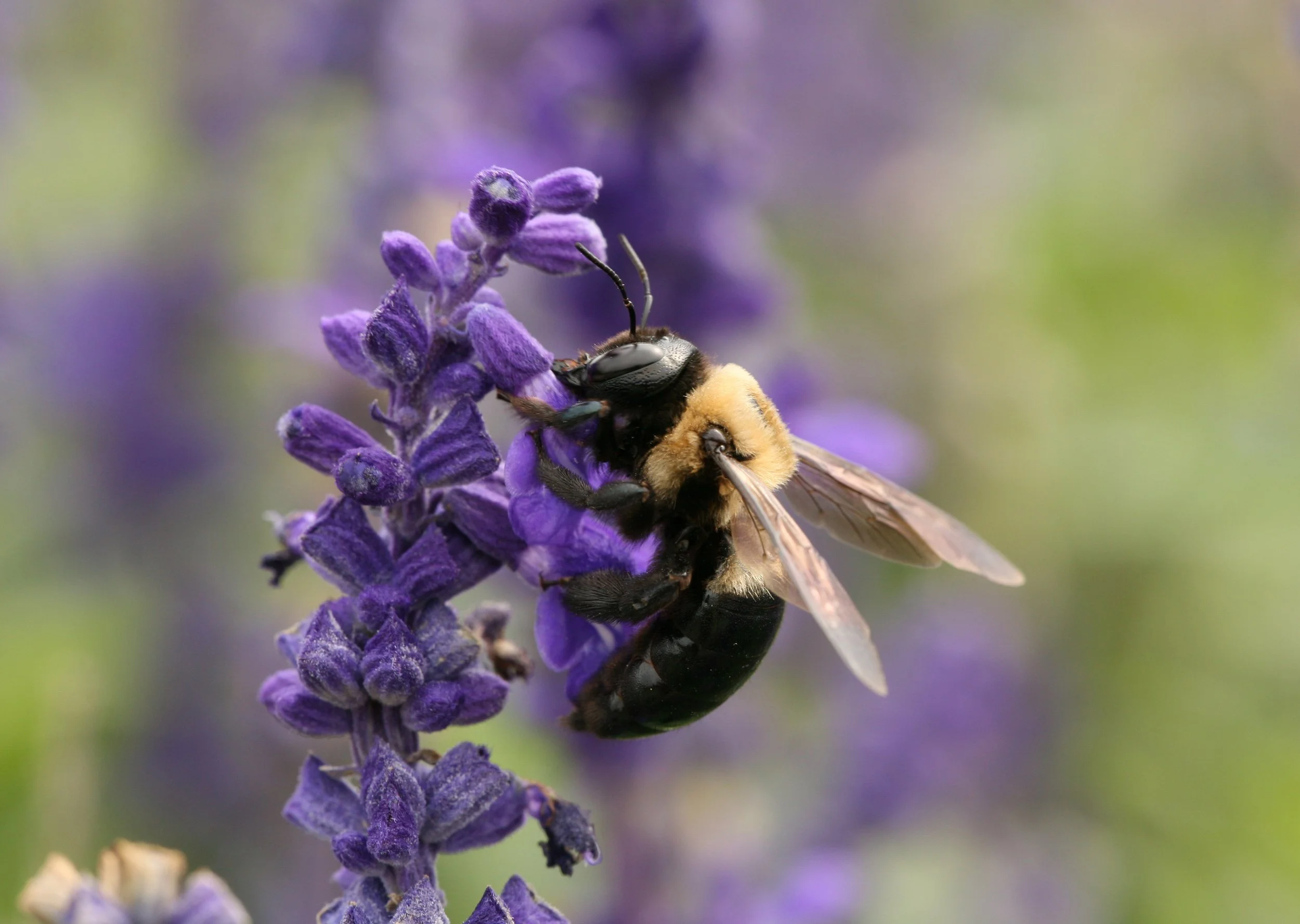
Carpenter Bee
Spot the Difference: Bee, or Wasp?
Scroll down to the bottom of the page for the answers!
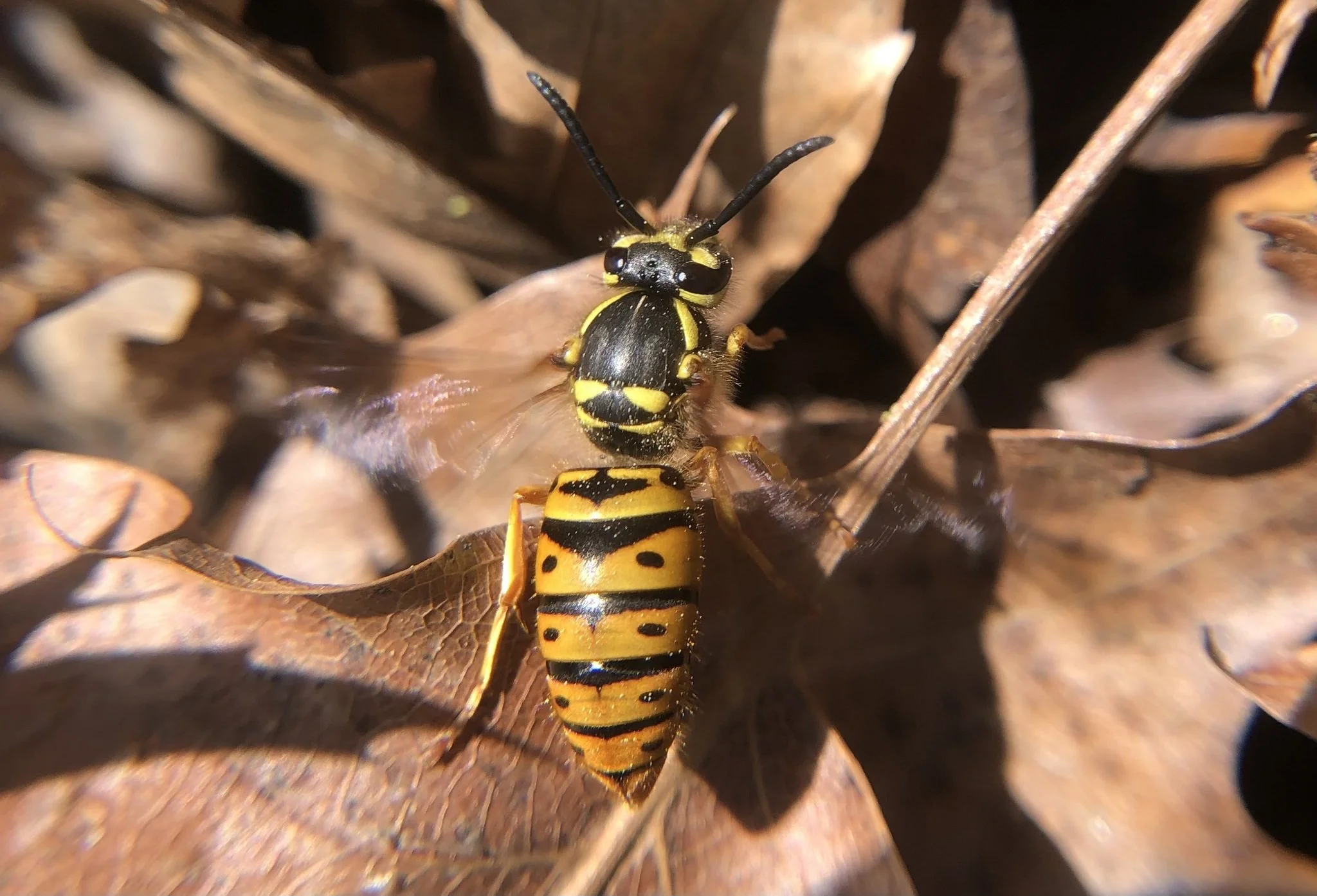
Or
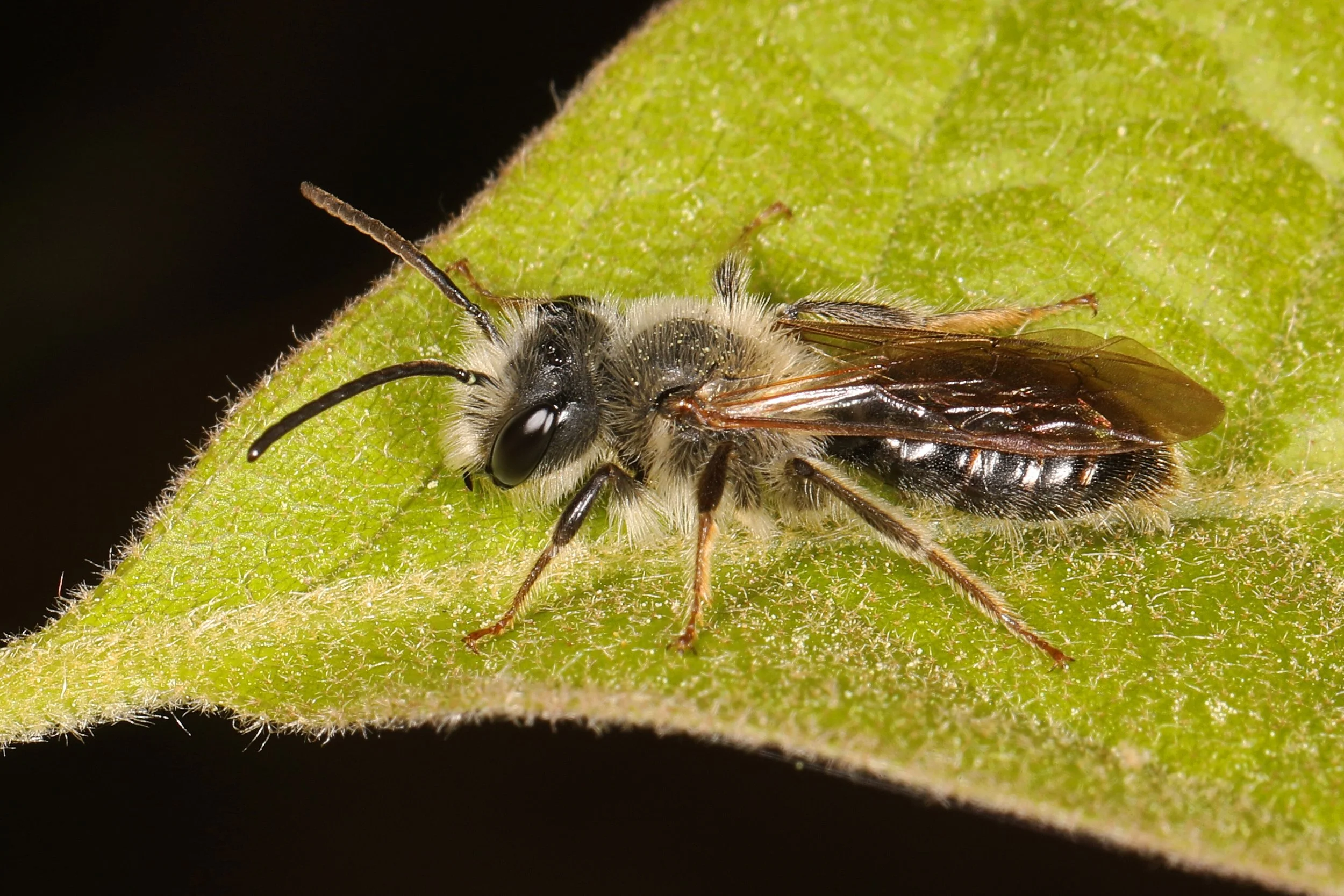
Decline of Native-Bees:
With natural habitat loss becoming increasingly prevalent, and native-resources becoming scarce — native bees can’t compete with the significantly more abundant, and social European honey bee. By early spring, the size of a honey bee hive averages around 30,000 to 50,000, and are often the first to emerge upon the arrival of spring. You can imagine, with natural resources declining, the effects this has on solitary native bees.
Habitat Loss:
In Boston, despite community and organizational efforts to conserve and perserve the already sparse amounts of natural habitat in our urban spaces, the city of Boston continues to allow developers to encroah on, construct on, and/or destroy natural habitats. Alongside the pollinators, where will the birds, and other critters go to hunker-down during the harsh winters, or scroching summers?
Invasive Plant Species:
Invasive species grow fast, and abudant, often replacing, or decimating perferred native-plant of many pollinators. Certain native bees specialize in specific plants, such as the squash-bee which mostly collects pollen from cucurbits (squash, melons, zucchinis, pumpkins).
Pathogens:
As honey bees and bumble bees are transported across the U.S. for agricultural-use, there are chances of parasites spreading, and becoming increasingly prevalent, such as: mites, parasitic-fungi, viruses, bacteria, and parasitoids (parasitoids eject eggs inside a bee-host, the larva feeds on the insides of the bee, and eventually causing the bee’s death).
Spraying Pesticides:
Insecticides and fungicides are highly toxic to bees, spraying plants with these toxic compounds gets in their harvested nectar and pollen, which in-turns affects their health.
Fun-Fact:
Certain flowers (potatoes, tomatoes, eggplants, and peppers,) are difficult to access pollen without buzz-pollination; bumble bees, carpenter bees, and some sweat bees are able to do buzz-pollination, but honey bees cannot.
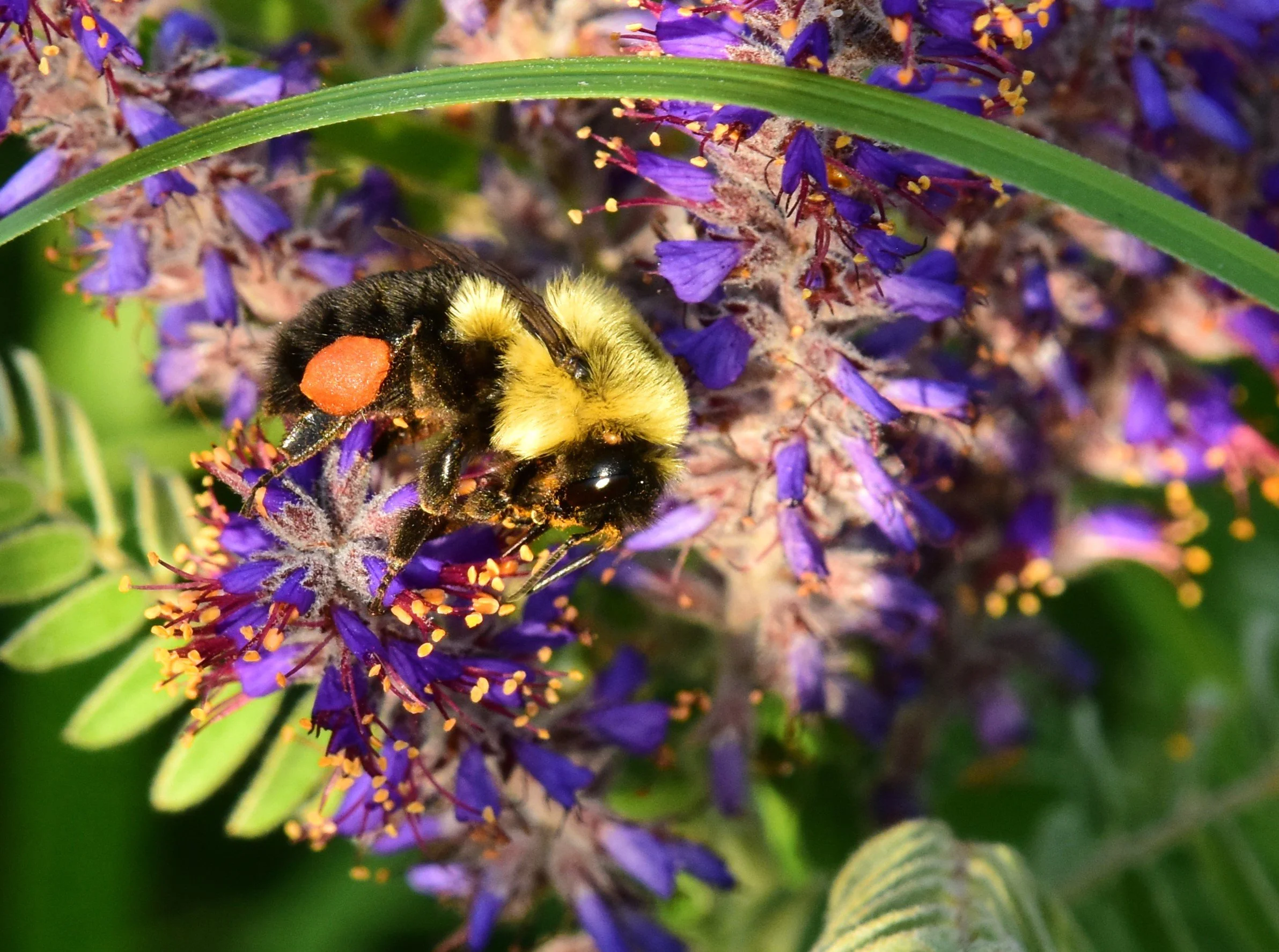
Common Eastern Bumble-Bee
Helping Native-Bees:
The decline of a native-bee species could mean the loss of a certain native plant, or a whole habitat. And other animals which rely on these habitats will be severely affected. #savethebees could be as simple as planting native pollinator plants in your yard, or balcony, or even, your outside home entrance.
Pollinator-Habitats:
An effective way of creating habitat spaces in your garden starts with biodiversity and abundance. Creating microclimates for pollinators such as: planting clusters of native flowers and plants, especially white, yellow, blue, and purple flowers, will attract more pollinators, and additionally birds, and other critters. And good patches of soil in-between clusters will especially help the bees which burrow and nest into the ground.
List of Native Pollinator Plants:
Milkweed: Often seen as an undesired plant by how prolific they grow, this sentiment couldn’t be more wrong; this wonderful native plant produces one of most beautiful clusters of flowers, and is an incredibly vital plant for many pollinators such as the monarch-butterfly and many native-bee species.
Common Milkweed
Swamp Milkweed
Butterfly Weed
Purple Milkweed (Endangered)
Aster: In Robin Wall Kimmerer’s book, Braiding Sweetgrass, Robin mentions how beautiful purple New England Asters and Goldenrods are when seen growing together, and how bees register this beauty as well.
New England Aster
Smooth Aster
White Wood Aster
Goldenrod: Equally as prolific as Milkweeds, you may have seen this clusterful yellow flower growing by roadsides, or open-fields.
Showy Goldenrod
Zig-Zag Goldenrod
Joe Pye Weed: A critical food-source for many pollinators during the late-summer, Joe Pye Weed, a tall, plentiful flowering-plant, is named after Joseph Shauquethqueat, a Mohican sachem (tribal leader,) during the 18th and early 19th century.
Cut-Leaf Coneflower: Strikingly yellow, Cut-Leaf Coneflowers are great at creating dense microclimates for sheltering critters during harsh weathers.
Giant Hyssop: With a rich licorice-scent, Giant Hyssop blooms beautiful purple flowers which are sure to attract many pollinators.
Additional Native-Flowers:
Spotted Bee Balm — Woodland Sunflower — Saw-tooth Sunflower — Prairie Sunflower — Elderberry — Common Evening Primrose — Common Yarrow — New York Ironweed
Trees for Bees:
Native-trees are wonderful for pollinators, because when spring arrives, these trees become tall, gigantic columns of blooming paradise, providing pollen and nectar for various pollinators.
Witchhazel —American Linden — Flowering Dogwood — Sweetbay Magnolia — Black Cherry — Red Mulberry — Tulip Poplar — Red Maple — Sugar Maple — Bur Oak — White Oak
Answers:
Question #1: C
Question #2: C
Question #3: B
Spot the Difference: Left/Top: Wasp — Right/Bottom: Bee