Bees & Beekeepers
Interview w/ Beekeeper: Bill Perkins
Our diet & culture in the U.S. has become quite dependent on the European honey-bee; 90% of the US’ honey-bees colonies are transported to California’s almond orchards.
Derived Pierre-Louis interviews Boston-area Bill Perkins about his experience and challenges with beekeeping.
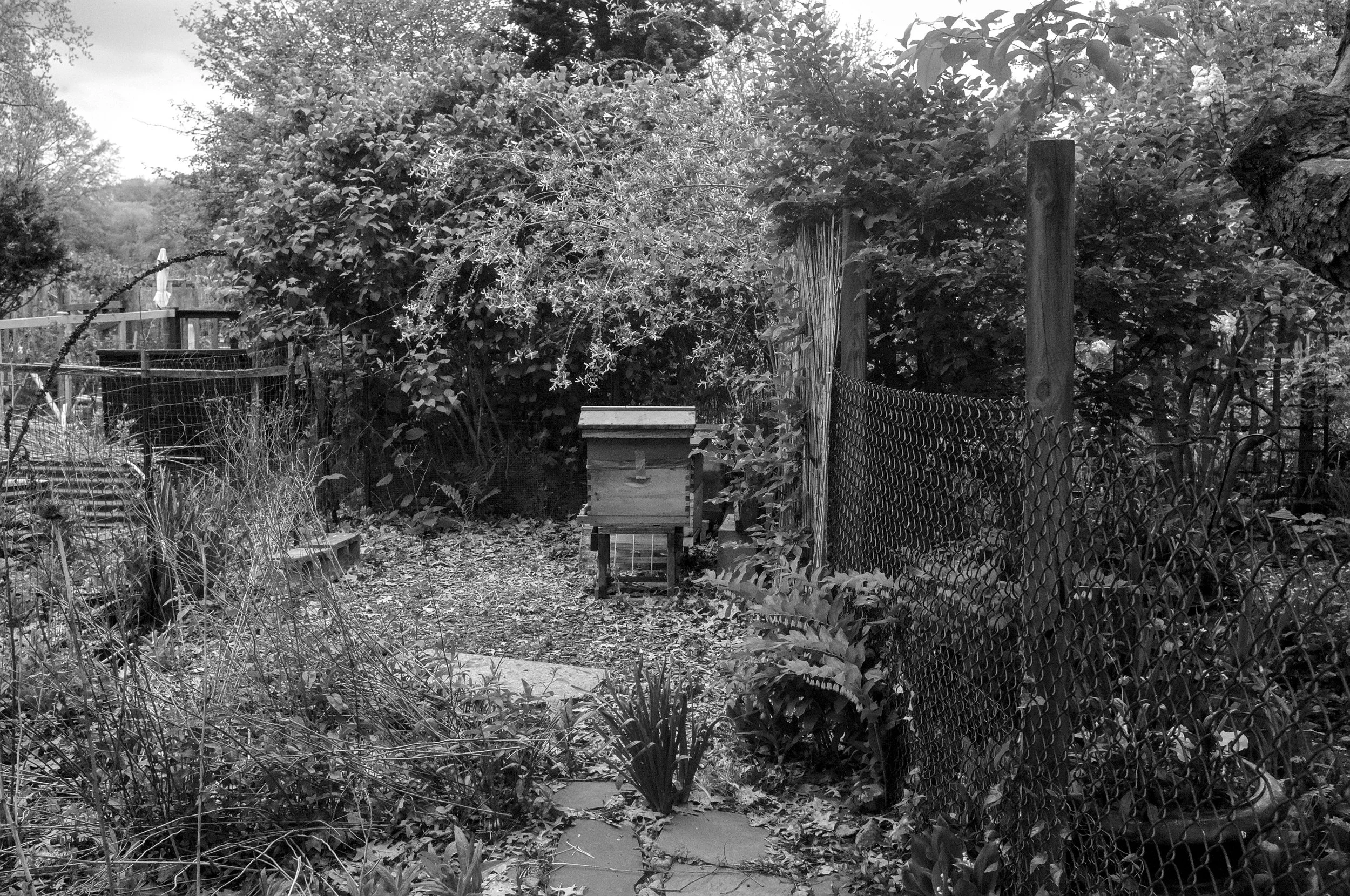
Introduction:
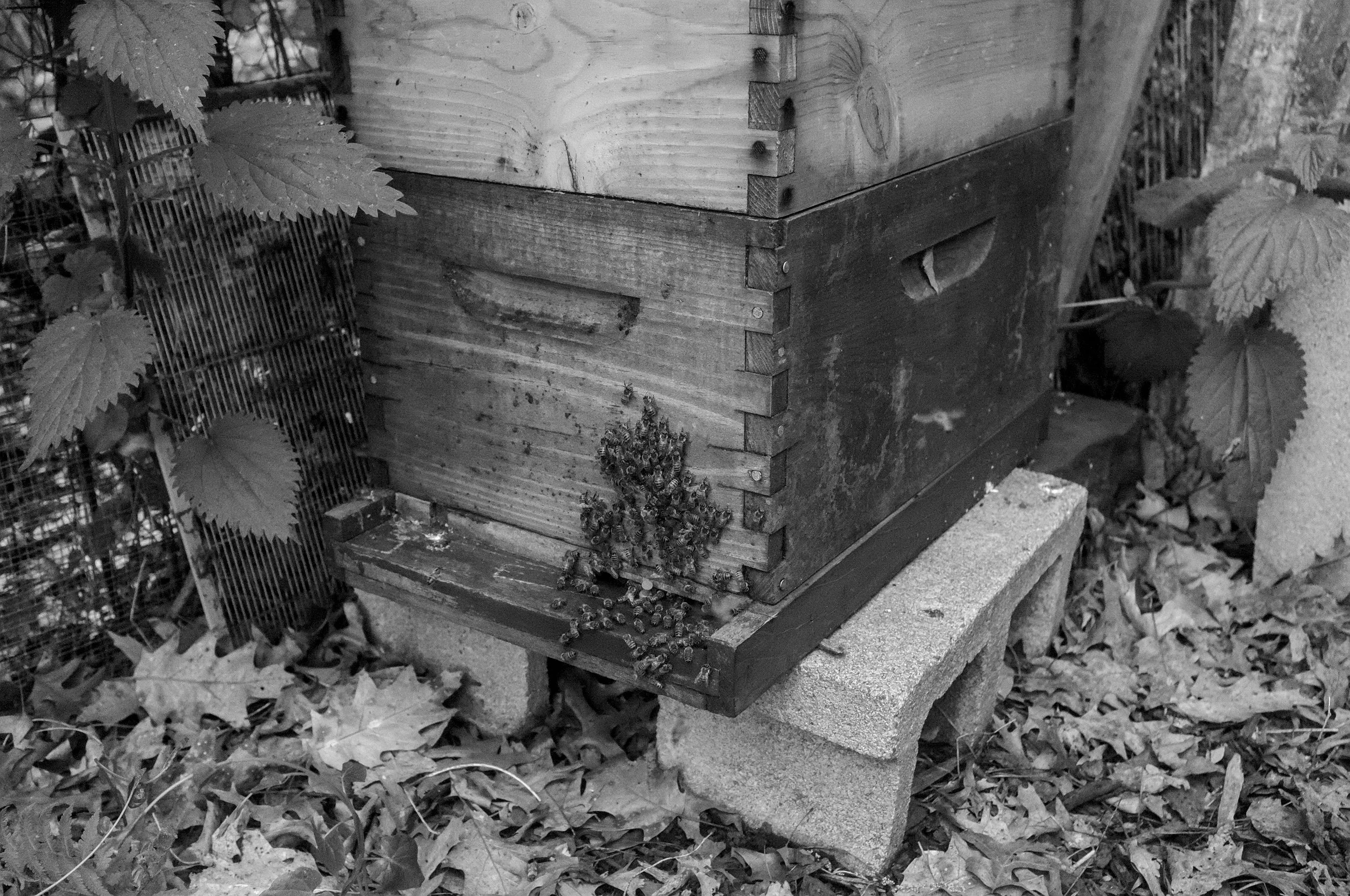
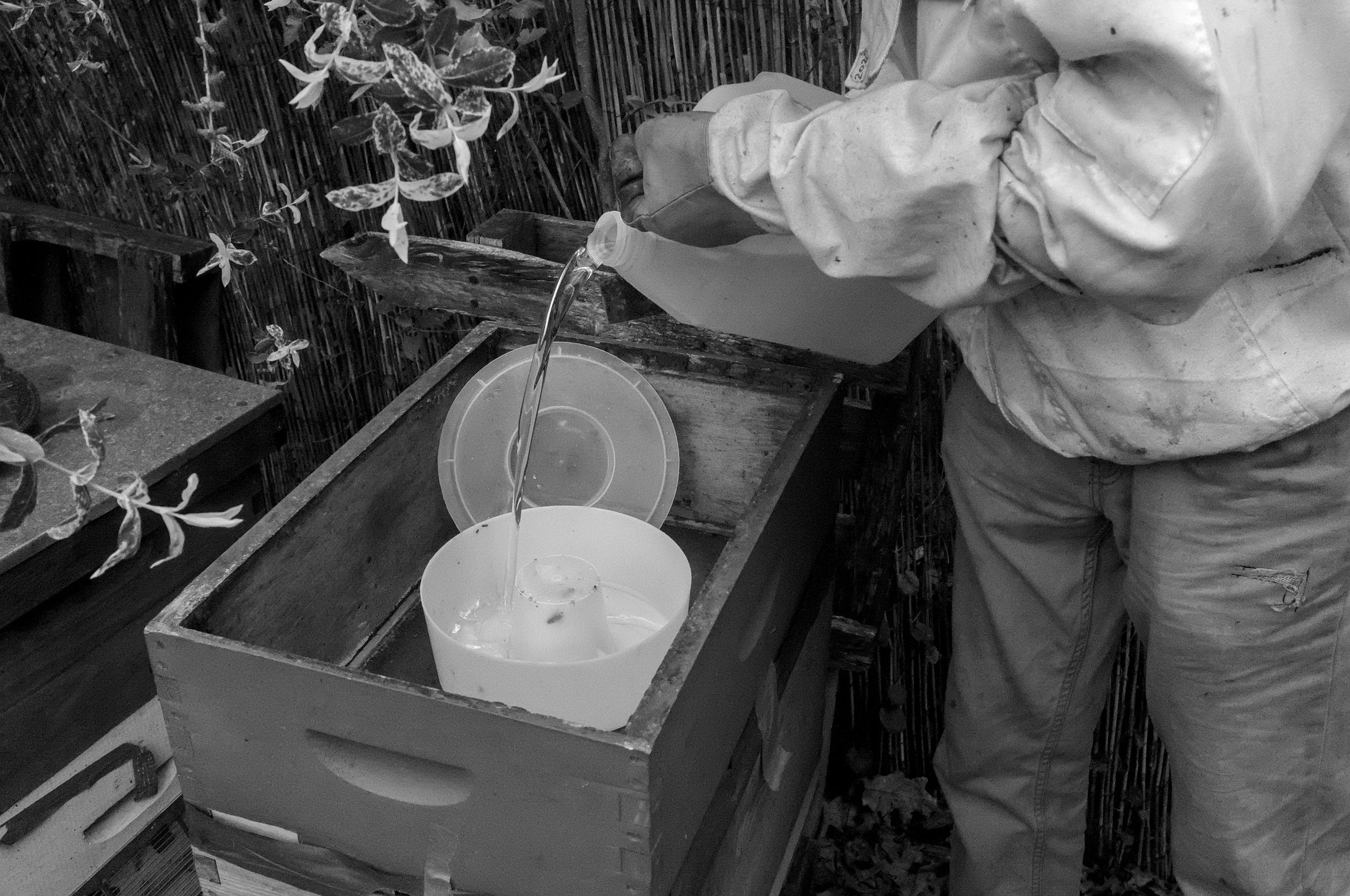
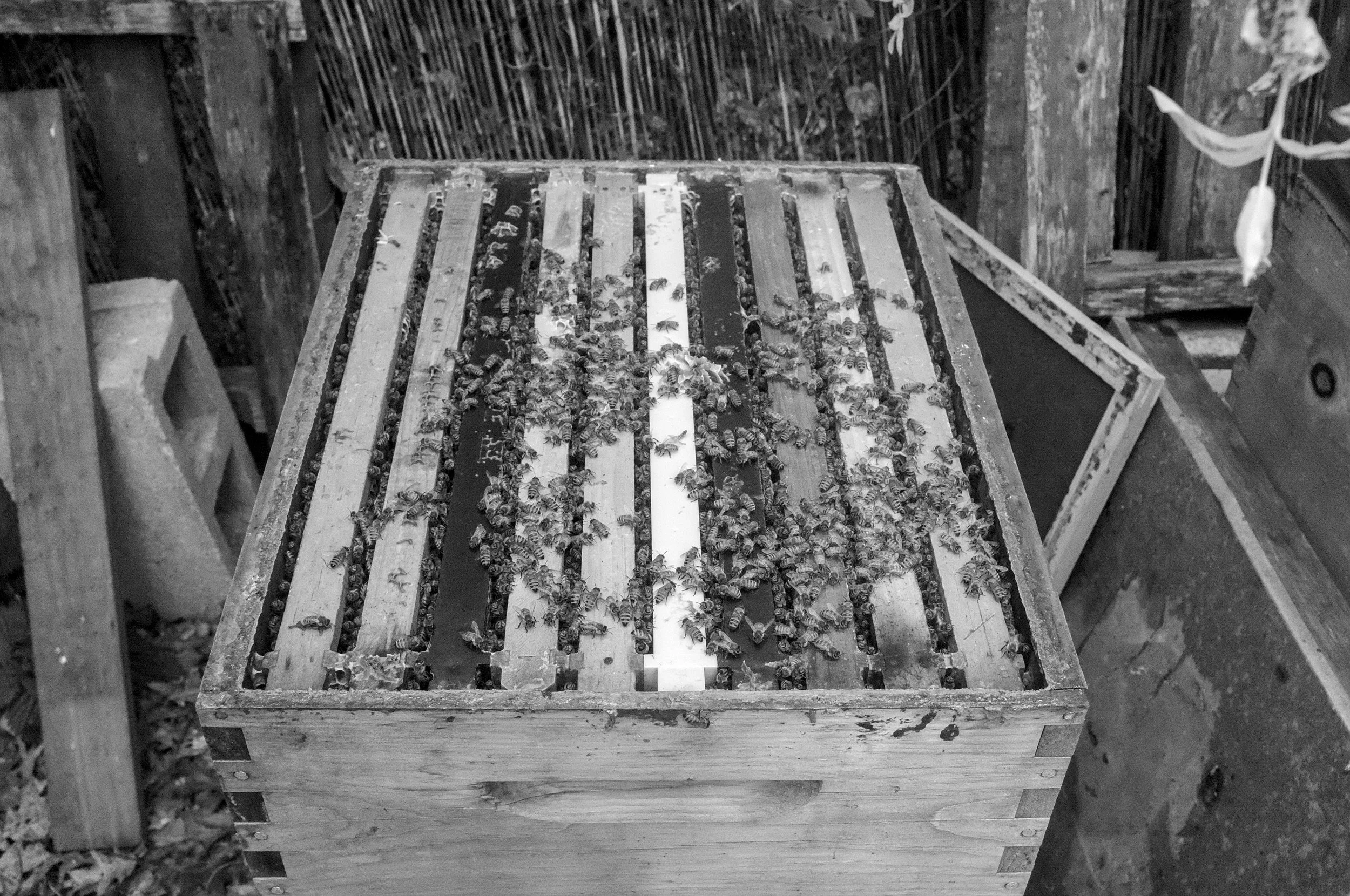
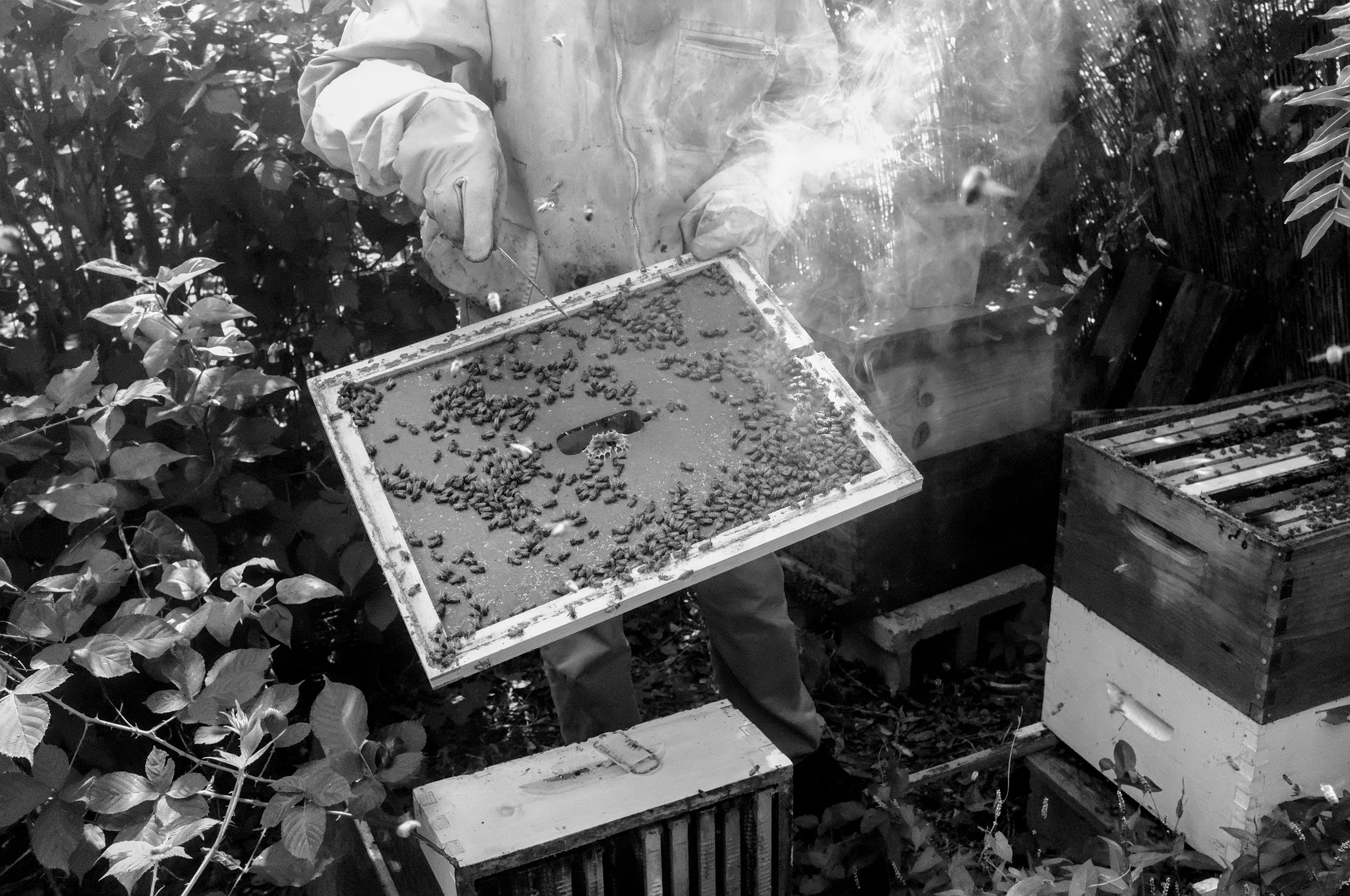
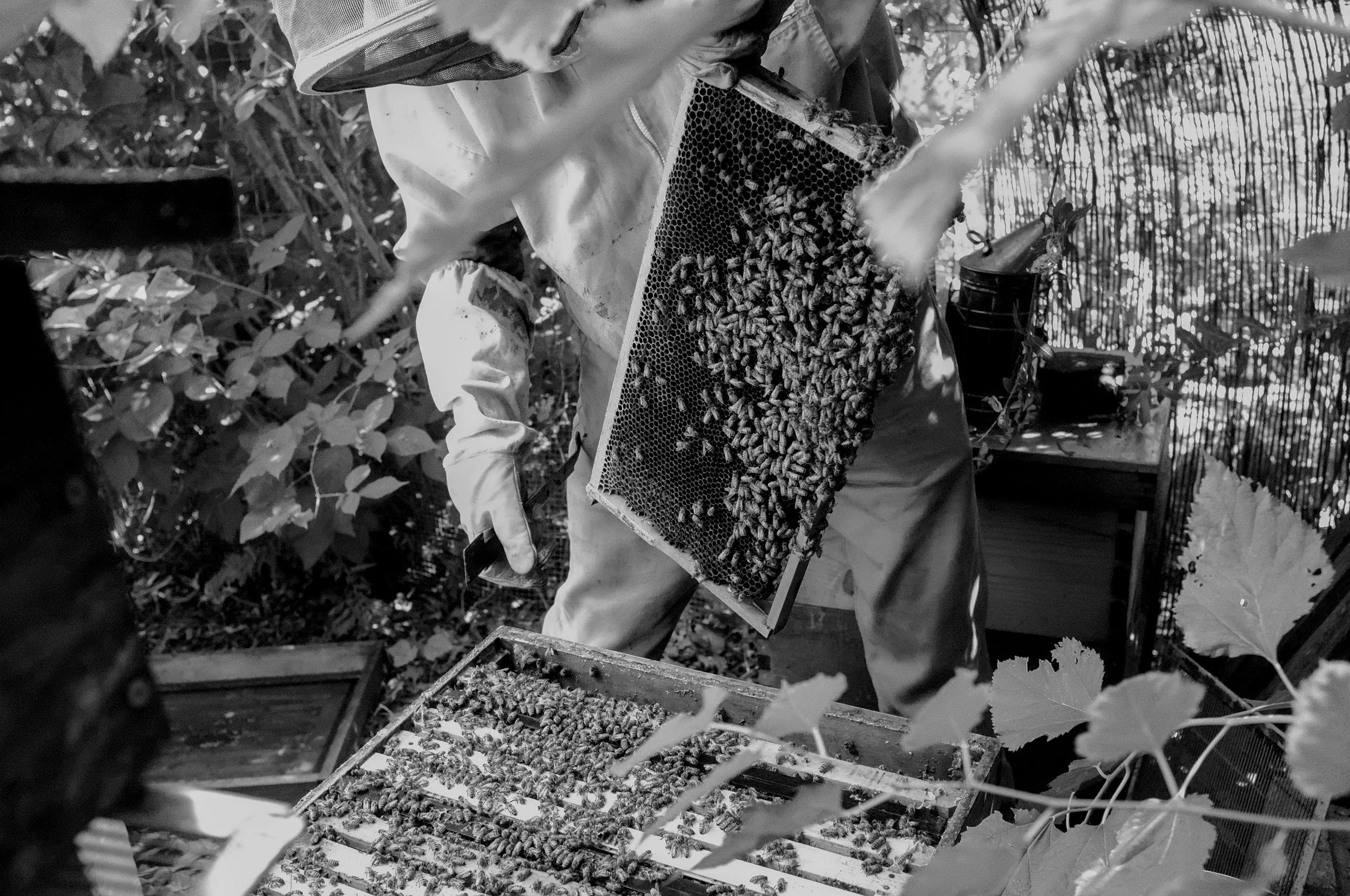
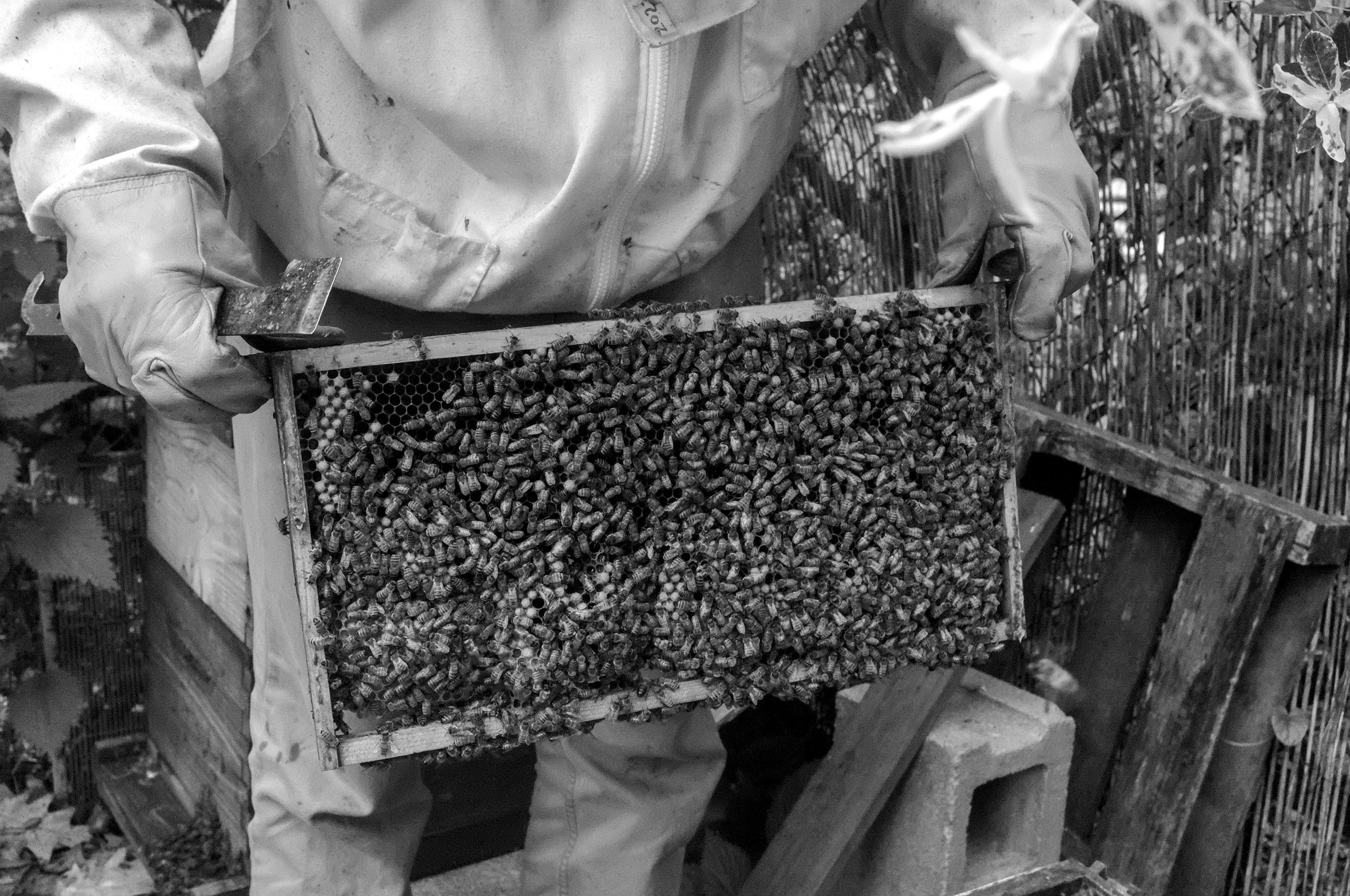
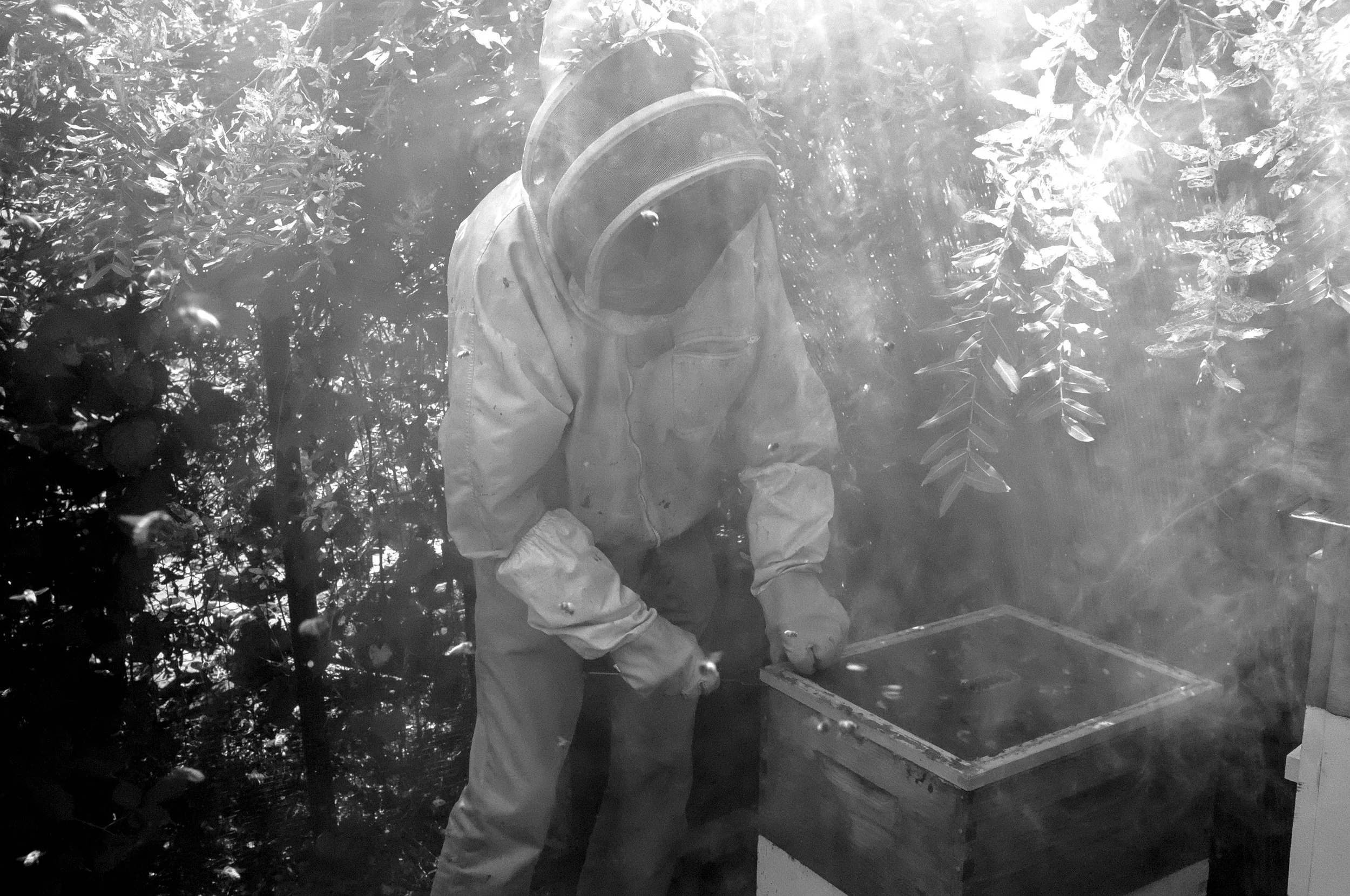
No bee-suit, no protective-wear — swarms of anxious and curious honey bees side-swiped my face and arms while I photographed, but besides the occasional landings on my face, the bees didn’t mind me. Bill is the beekeeper in these images, his experience in beekeeping is extensive and fascinating; photographing and interviewing him was insightful to say the least! Beekeeping various a wide amount; alongside honey-bees, there are native-bees; creating bee-hotels and maintaining native pollinator habitats establishes a great way of keeping bees, without the added effort (native-bees don't produce honey for extraction, and many, almost all are solitary.)
We've become quite dependent on the honey-bee for many of our agricultural needs – too dependent even. The honey-bee, although is not native to North America, has come to solidify itself in our diets, and culture; it would be greatly disingenuous to suggest otherwise. But often, keeping hives of honey-bees without the consideration of native-bees can unfortunately lead to honey-bees (being a highly-social species,) to easily out-compete native-bees (mainly solitary) for resources. And this, alongside destroying our natural-environments, endangers our native-bees. It's important to maintain a balance if you are keeping honey-bees; plant native pollinator plants nearby to discourage outside resource competition with native-bees, practice hive-health check-ups, and possibly, while you are at it, establish native-bees sanctuaries; planting additional native pollinator plants, creating a bee-hotel, and maintaining good patches of soil for the bees that dwell, helps greatly.
Close to 1/3rd of our food comes from bee-pollination: apples, almonds, avocados, cherries, peaches, peppermints, sugarcanes, tomatoes, vanilla – I’ll keep going: apricots, pears, mangos, blueberries, cranberries, strawberries, raspberries, blackberries, papayas, pumpkins, squashes, sesames, nutmegs, melons, grapefruits, grapes, coffees, chocolates and much more! To give some perspective: honey-bee colonies are transported across the U.S’ agricultural-land to help mass-pollinate our foods; close to 90% of the US’ honey bees are transported to California’s almond orchards; and California produces 80% of the world's almonds. Adding on, in the U.S, the demand for honey-bee pollination is increasingly exceeding the amounts of honey-bee colonies we have, and to make matters worse, the bees, both native and non-native, are dying, at an alarming rate – pollution, herbicide/pesticide use; our damage to the environment, and the varroa-mites are leading causes to the declined population of bees in the U.S.
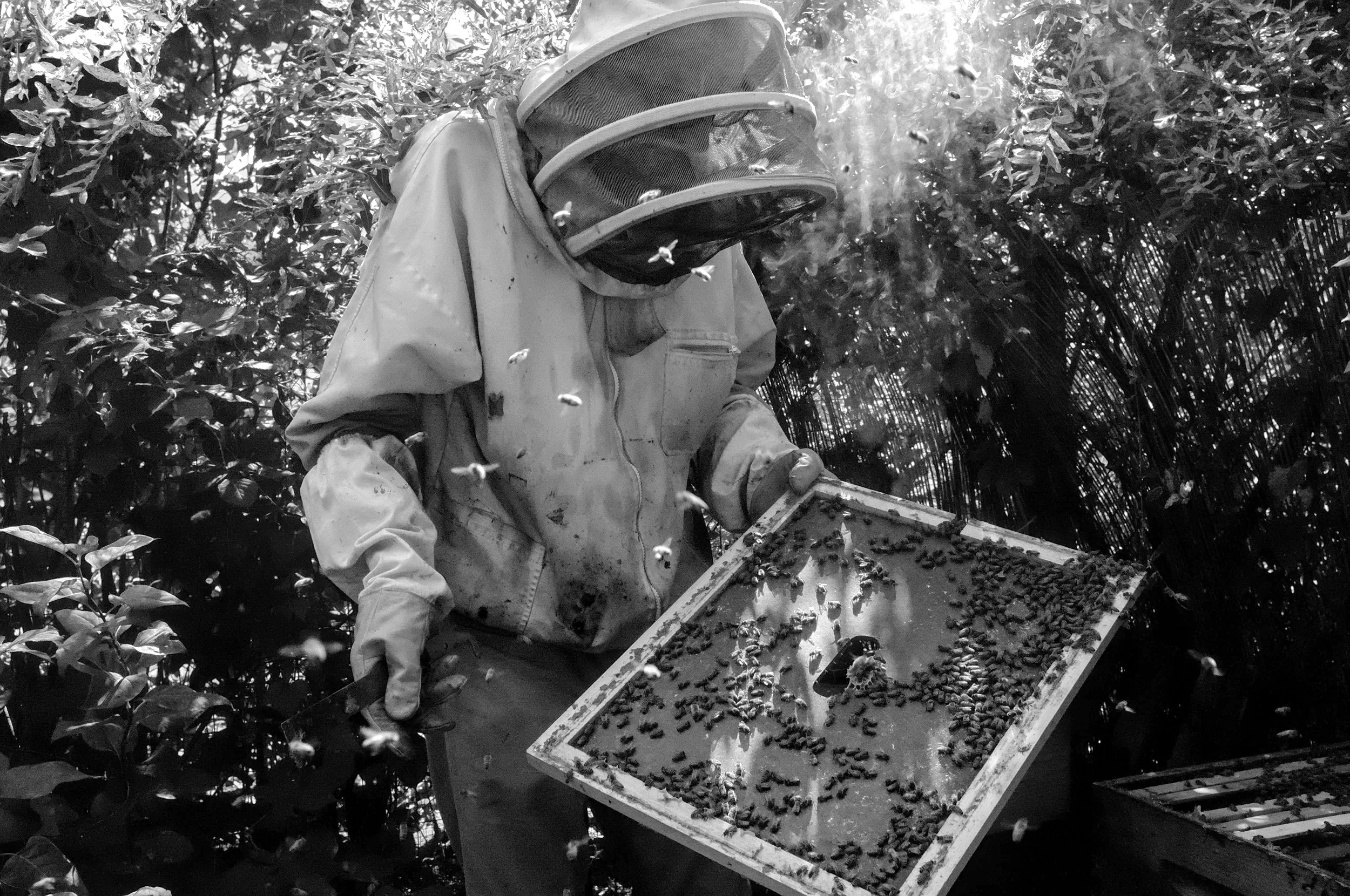
Interview w/ Bill Perkins
Introduce yourself; who are you and where did you grow up?
My name is Bill Perkins, I moved to Boston about 30 years ago. I grew up in Pennsylvania for about 12-14 years of my life; my family was there, so I kept going back. I’ve spent time in Washington D.C – and Massachusetts as a young man. As well as Venezuela for a few years, and 6-months in Indonesia.
How did you get into beekeeping and how many hives do you have?
I have probably about 12 hives, some are big and some are small. I'm able to collect honey from about 7 hives currently, and 10 by winter. I got into beekeeping somewhat by accident; I had opened up this shop in Boston, providing people with an opportunity to learn about different types of farming. It was called agricultural-home — it was a place where people can find the resources and supply needed to explore farming or agriculture in an urban-setting.
As a young boy, there was a tree next to our house that was covered with bees for most of the summer, and I used to go out and catch them in a jar, I would watch them and then let them go — they never bothered me, and I sort-of got fascinated by them that way, so maybe it all started there.
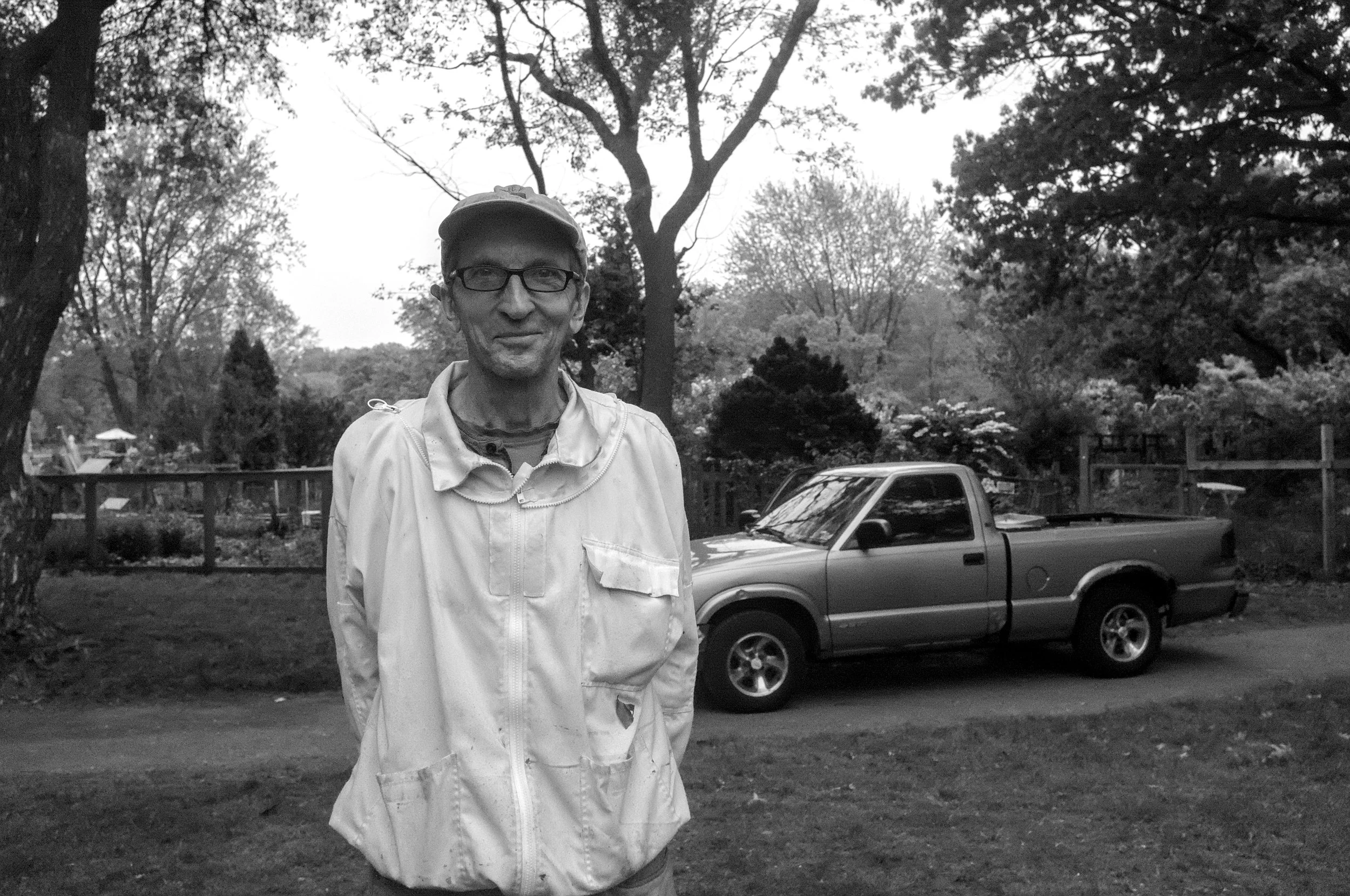
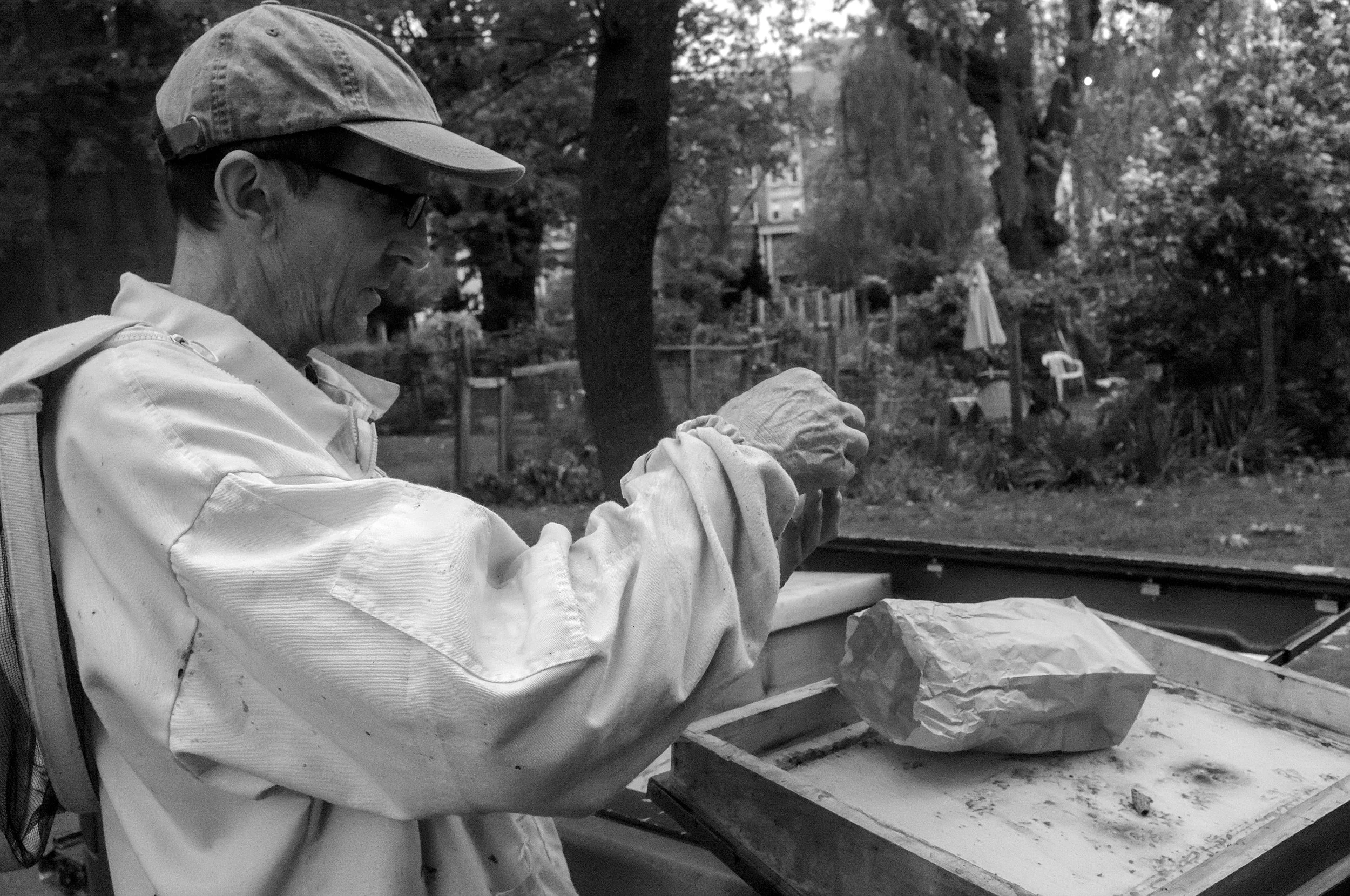
Bill in front of his truck near one of his bee-hives at Fenway’s Victory Garden.
Leading on from the last question – how long have you been doing this for?
Before I moved back to Venezuela in ‘77, I had set up a beehive at my sister’s house, which was before the very destructive Varroa-Mites appeared on the scene. You could have literally set-up a bee-hive — walk away and come back later to get some honey. So I was a very passive beekeeper — if you could have even called me a bee-keeper then.
But eventually, I moved out the area where my sister lived, I would later set-up a hive at my mother’s house…which was maybe…30 years ago — it never really worked out…a little bit — but I didn’t have a mentor, I didn’t listen to any research, or anything, so I didn’t really become a beekeeper until about 10 years ago when I opened up the shop and started keeping bees because I had to – I was providing supplies and bees to people and I had to know what I was talking about.
What sense of enjoyment or fulfillment do you get from beekeeping?
Just being outside, I enjoy working with other people, seeing other people, and offering help. I enjoy being in nature and the zen of a beehive — you can really get lost into it, if not frustrating.
Are there any challenges to beekeeping and are you facing any currently?
In-regards to beekeeping in general, it is really the mites that are the biggest challenge – for everybody – and time management; I keep them in different farms and I love doing that, but it also means, that I'm going to one place for one or two beehives — pulling out all my equipment, doing all the inspections, closing up and doing it all again somewhere else. It’s not very time-efficient.
What are some beekeeping challenges you might face in an urban environment vs. a rural environment?
Swarming is a big one, your neighbors — you’re in a tighter space, and so you’re more out to have people encounter your bees, whether they’re just curiously walking by, or having one of the gardener’s complain about the bees, and having to move the hive.
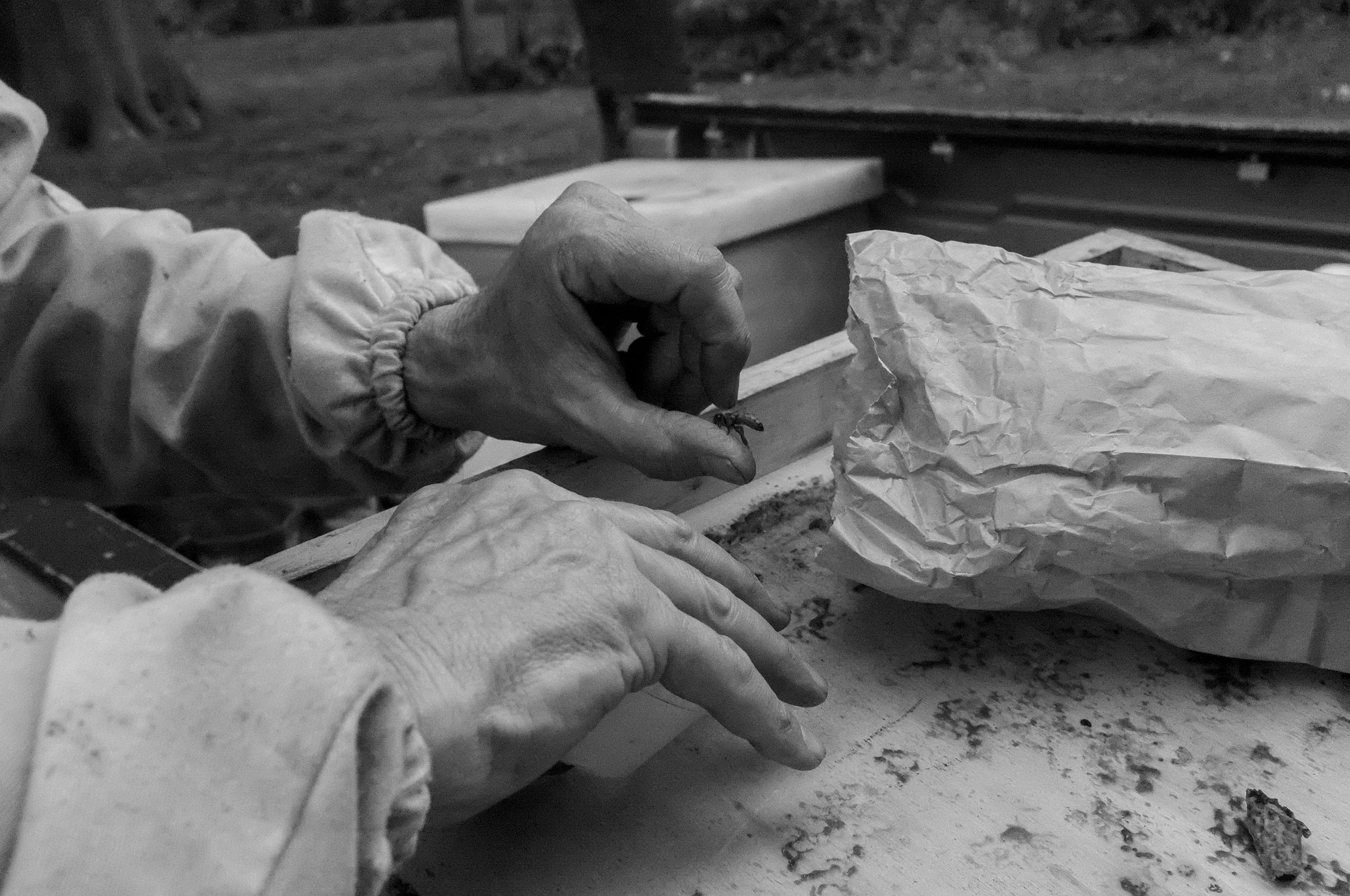
Bill holding a young queen honey-bee from his hive.
What has your experience been in beekeeping and what have you learned?
I feel like I’m getting better and better all of the time; the experience in the beginning was frustrating but I’m feeling more and more confident.
Do you have any advice for those that are thinking/just getting into beekeeping?
Take a class, join a club, find a mentor, and read more on beekeeping, careful of the rabbit-hole which is the internet and Tik-Tok. It’s good to learn and focus on practical things.
Are there ways we as the general public can help the bees?
I think just by beekeeping really, because the only way they're going to survive at the moment is by people keeping them and treating them for Varroa, because the bees still haven’t develop any kind of self-defenses against them — there are people working on it — we’re having a lecture about this next Thursday…they're going to tell us if there's any hope.
If I lived near a beekeeper, would letting the weeds grow (dandelions and milk-weeds,) and planting pollinator plants and native wild-flowers act as a lending hand?
Having a pollinator garden helps the bees — to a point, but bees get most of their nectar from trees. Around here, the big nectar producers are willow, locust, and linden trees — there are few flowers in a garden, but when you see a tree, it blooms a 3-dimensional column of flowers and it’s just full — in so many ways trees are where it’s at. But, what’s important about wild-flowers is that it remains as a resource for bees to collect when the trees aren’t blooming – trees usually finish pretty quickly and for that reason, pollinator gardens/wild-flowers are necessary to fill in those gaps in-between the repose periods after heavy nectar flow.